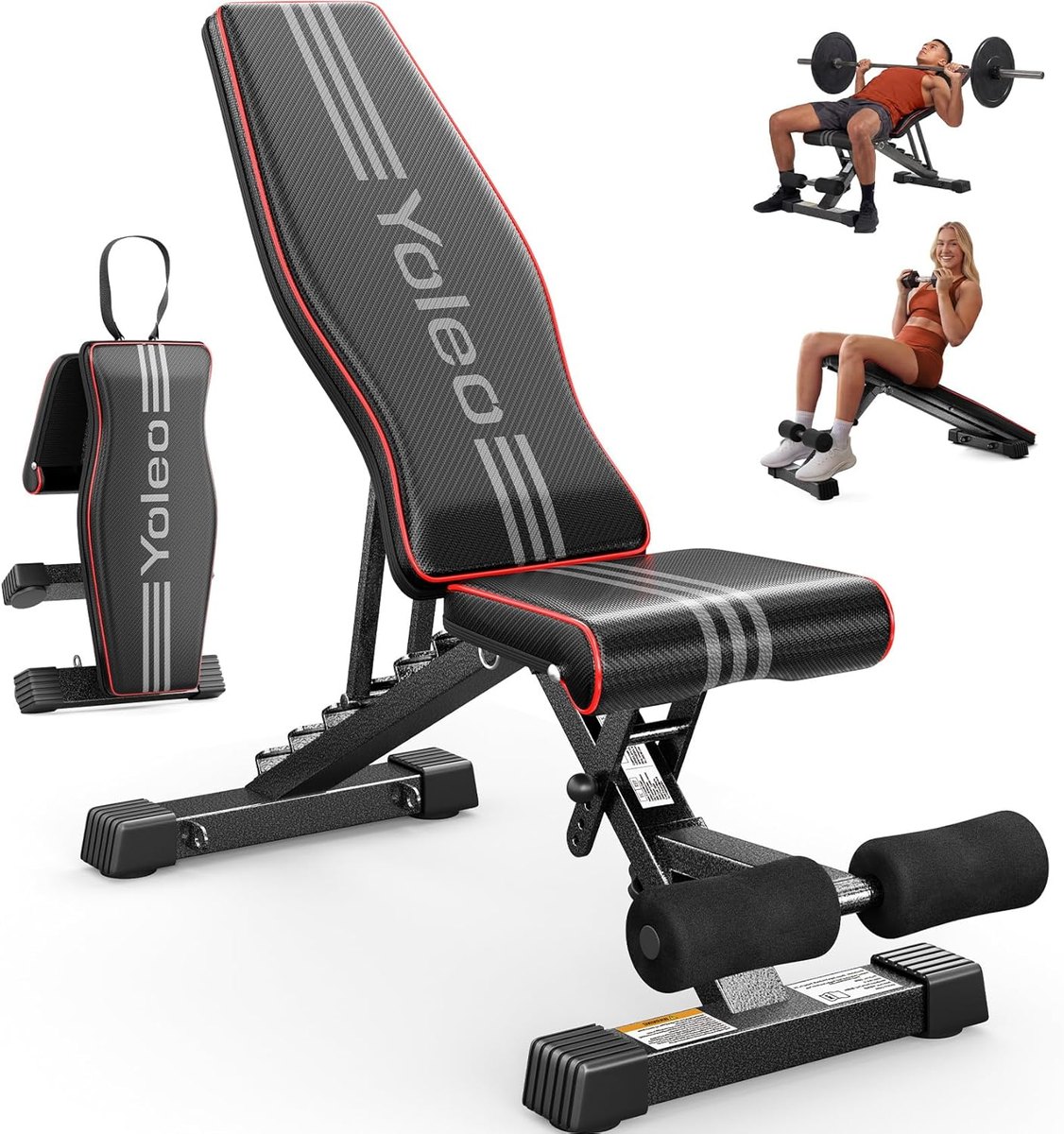
YOLEO Adjustable Weight Bench, 827 lb
The one that lands ready — first benches, small rooms, dumbbell work.
$75.99last read at the partner store

Where the press lands
A bench is the first load path most people buy, and the one they lie on for years. Ours run from a folding 827 lb frame that lands ready out of the box up to a three-post commercial bench built for competition posture.
Read three numbers on this page and you can pick in a minute: tested capacity, back angles and folded size. Capacity tells you what the frame takes; angles tell you what the programme can ask for; folded size tells you whether the room stays usable. Everything here folds, and everything here has a handle or wheels.
The one that lands ready — first benches, small rooms, dumbbell work.
$75.99last read at the partner store
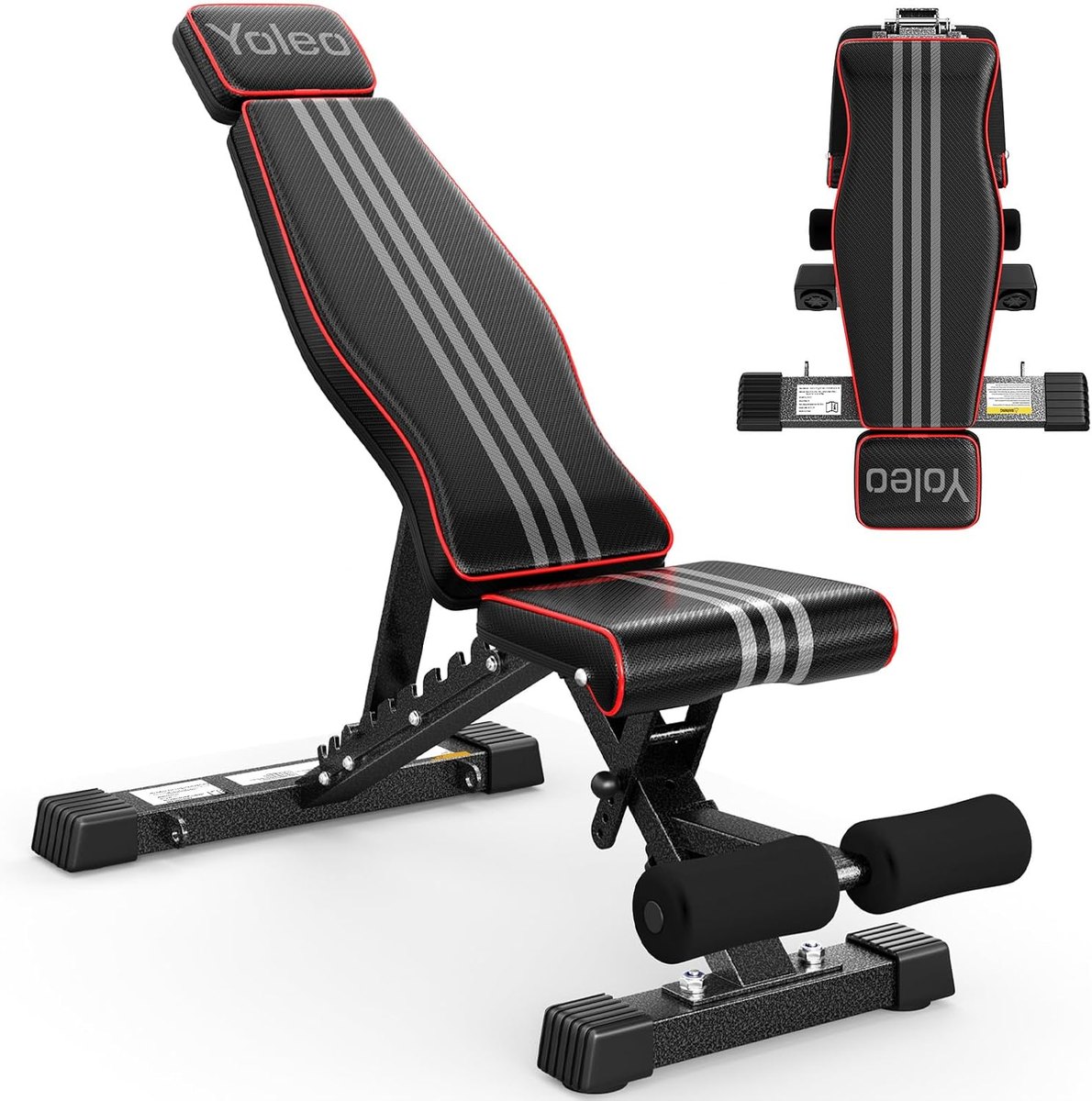
For long spines — tall lifters, seated press, full-body sessions.
$89.99last read at the partner store
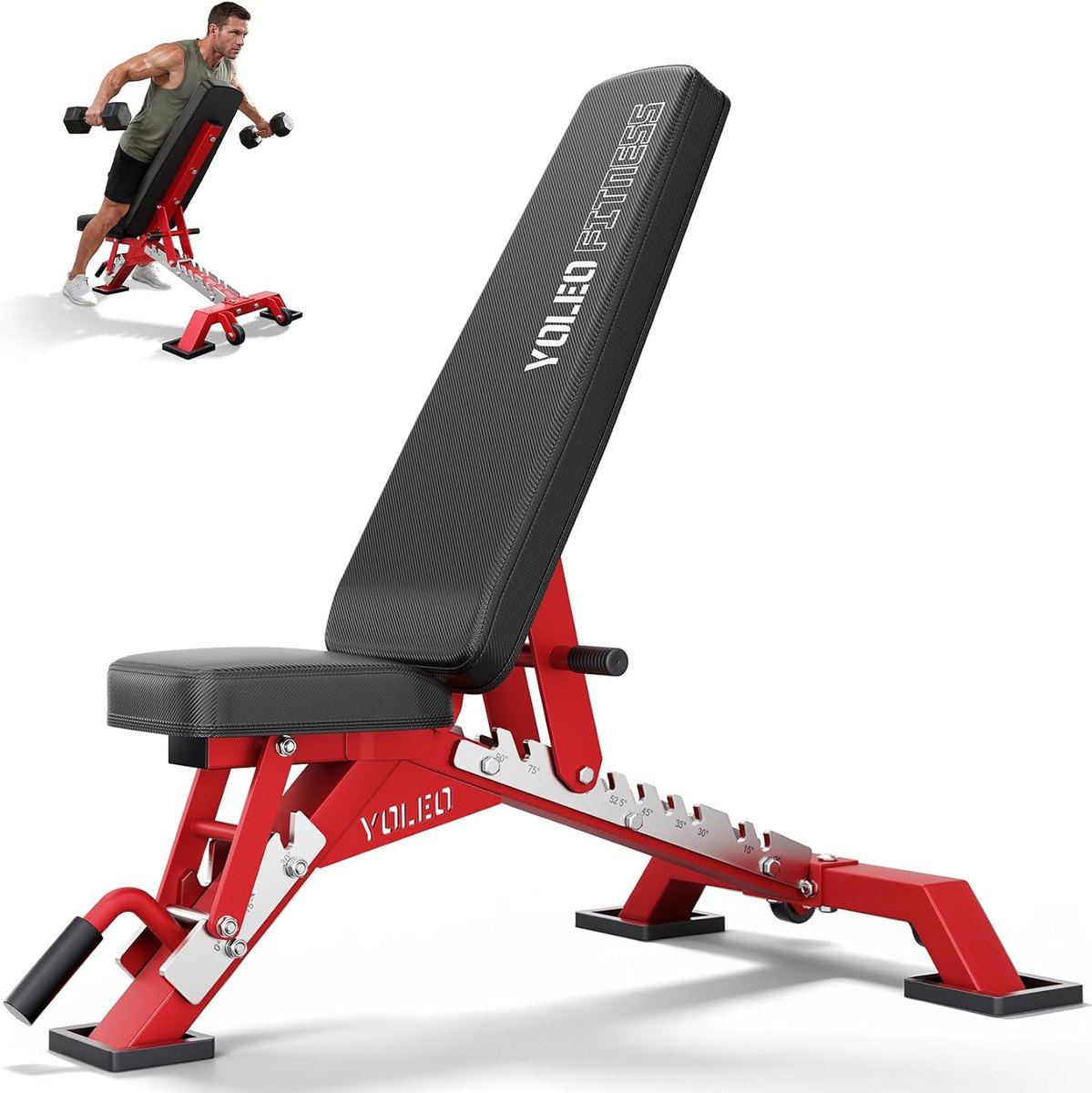
Competition posture — heavy pressing, shared rooms, meet prep.
$199.99last read at the partner store
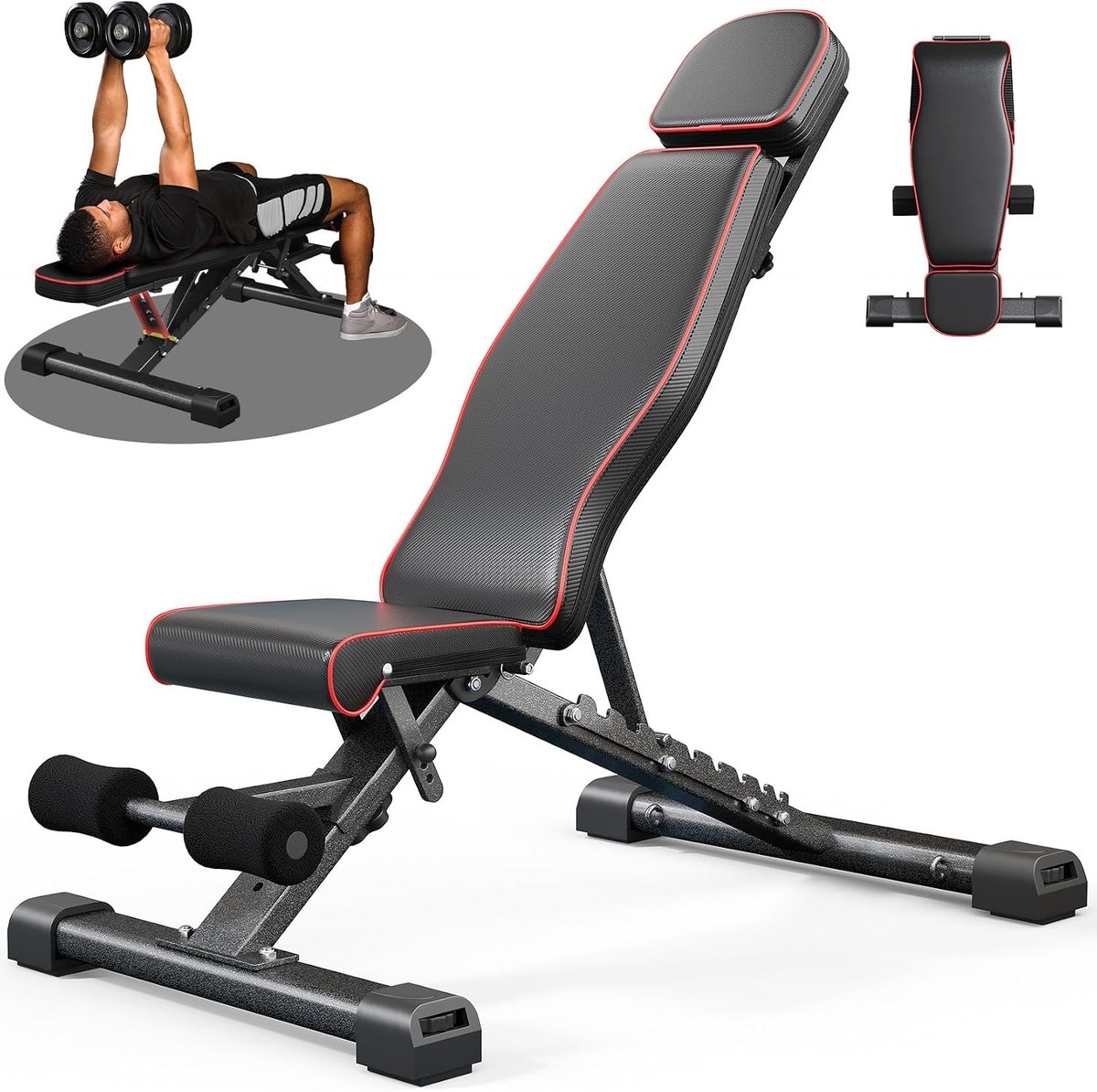
Bench and uprights, one frame — taller lifters, flat press, small rooms.
$105.99last read at the partner store
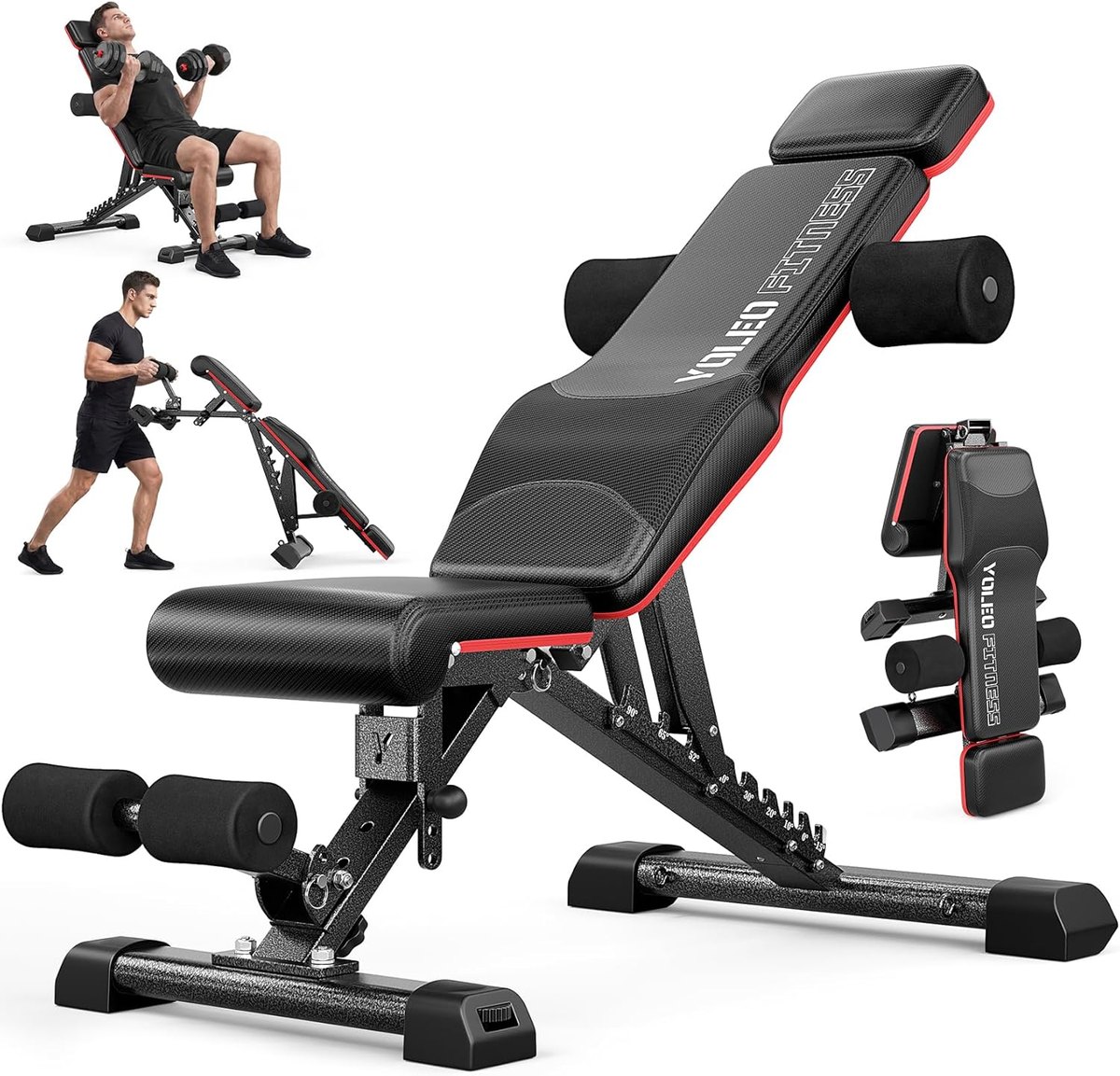
810 ways to set it — press days without a rack, progressive programmes.
$149.99last read at the partner store
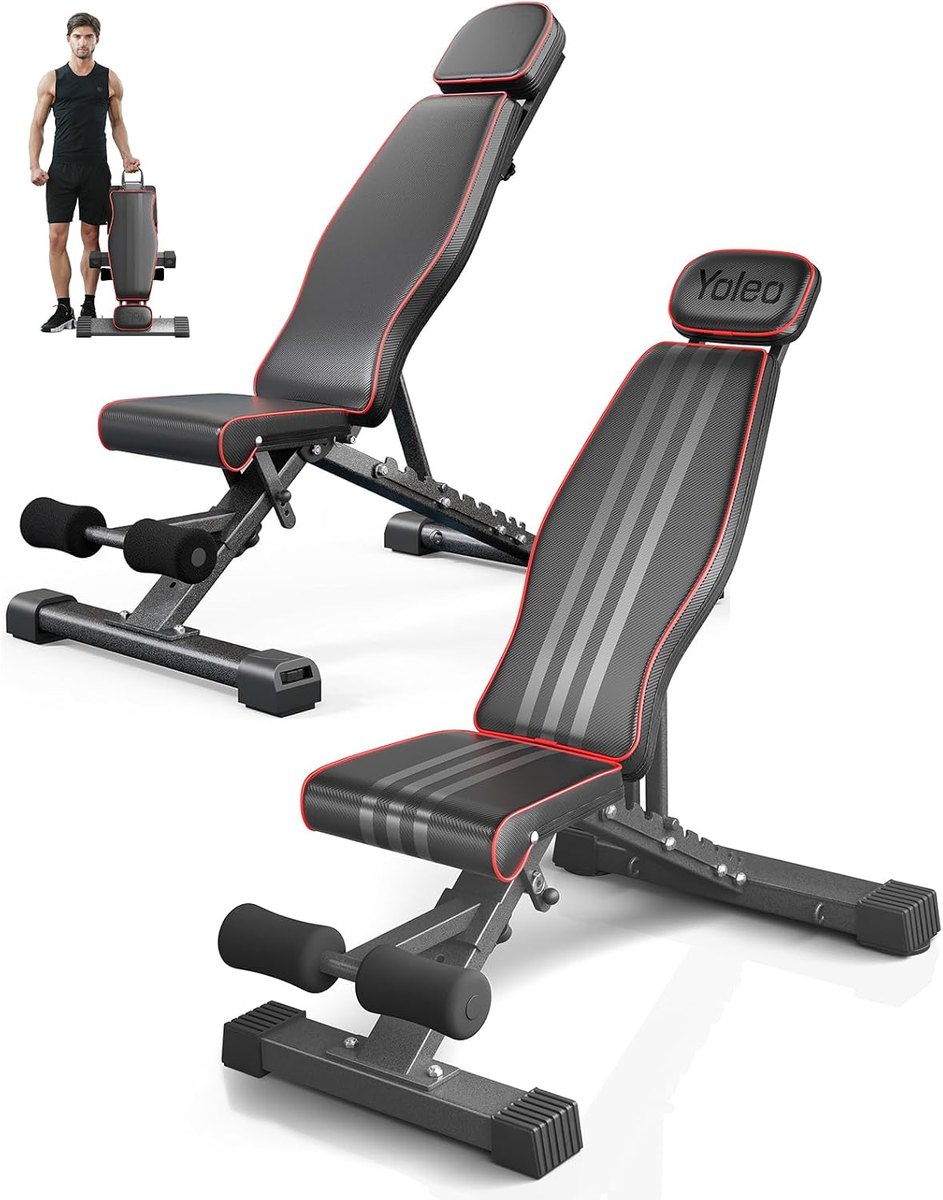
Two benches, one setup — two-person sessions, circuits.
$183.58last read at the partner store
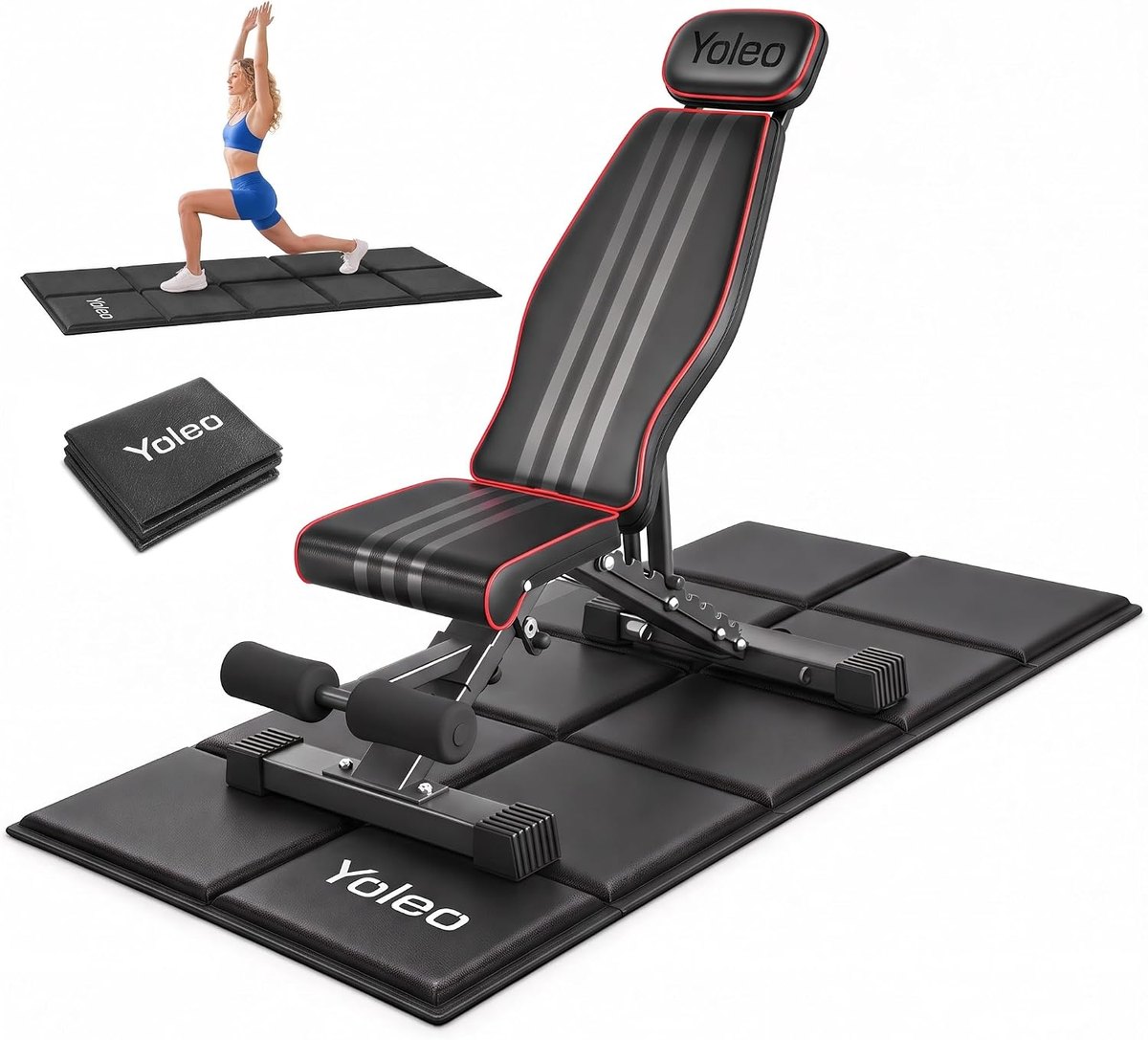
Bench plus the floor under it — apartments, hard floors, quiet training.
$109.18last read at the partner store
The long answer
A bench is the only piece here you lie on, so it is the only one where a millimetre of geometry turns into a training decision.
Flat for raw pressing, 15 to 30 degrees for the upper chest, a locked 90 degrees for seated shoulder work and a decline for core — that is the whole useful range, and every bench on this page covers it. Counts above that are combinations, not new positions: 84, 90, 270 or 810 setups all describe the same four planes with more stops between them.
Price stops being the difference once the frame holds. After that it is contact: a 13-inch seat under the shoulder blades, dense foam that is still flat a year later, and a seat that pins beneath the back pad so incline work does not turn into a slow slide forward.
Twenty-three pounds and a folded size around 31 by 13 inches means the bench goes under a bed with one hand and the room goes back to being a room. That is the quiet reason folding models outlast the ones that live permanently in the middle of the floor.
Straight answers
The 827 lb model. It arrives 98% built, folds under a bed and covers flat, incline and decline work — which is most of what a first year of training asks for.
The two press-stand benches do: the 880 lb and the 1,100 lb. The rest are pad-only and pair with a rack.
An independent test standard for the frame load. Where we quote it, the number came from a test house rather than a spreadsheet.
Chalk notes
Two benches can both say 800 lb and mean different things. Here is how to read the number, and which one to compare when you are choosing.
Read the noteFour measurements decide whether a rack fits, and only one of them is the rack's own height. Take them before the delivery, not after.
Read the note